Best AI Agents for Accounting Firms (2026)
Susan is our first recommendation for accounting firms that want AI agents to take responsibility for recurring work across the software they already use. The Susan team implements and maintains the agreed workflow, with a fixed monthly fee covering usage, support and fixes. Start at trysusan.com with the job you want managed.
Explore Susan for accounting firms
For managing partners of established businesses doing $5M+ in revenue, the decision extends beyond a feature list. An agent may prepare a reconciliation faster, but the firm only gains capacity if the documents arrive, the reviewer has what they need and the next person can complete the handoff. Choose the operating model around that whole sequence.
This guide compares Susan's managed AI employees with accounting-focused products. Susan is the agent offering we recommend; Fixed Labs provides consulting and broader implementation services. For a comparison of training and advisory firms, see our AI consultants for accountants guide.
Five options, with Susan first for managed recurring work
| Provider | Published focus | Decision to settle |
|---|---|---|
| Susan | Managed AI employees working across existing applications | The recurring job, its acceptance criteria and the approval owner |
| Basis | Agents built for accounting | Exact workflows, availability and responsibility for firm-specific integration |
| Truewind | Close, reconciliation and journal preparation with Sage or QBO | Supported client ledgers, review process and surrounding handoffs |
| Docyt | Accounting automation and a hospitality-focused partner offering | Fit across the firm's client portfolio and operational systems |
| Digits | AI-native accounting with close and bookkeeping capabilities | Ledger adoption and the responsibilities retained by the firm |
1. Susan: best for managed AI employees across the firm's existing software
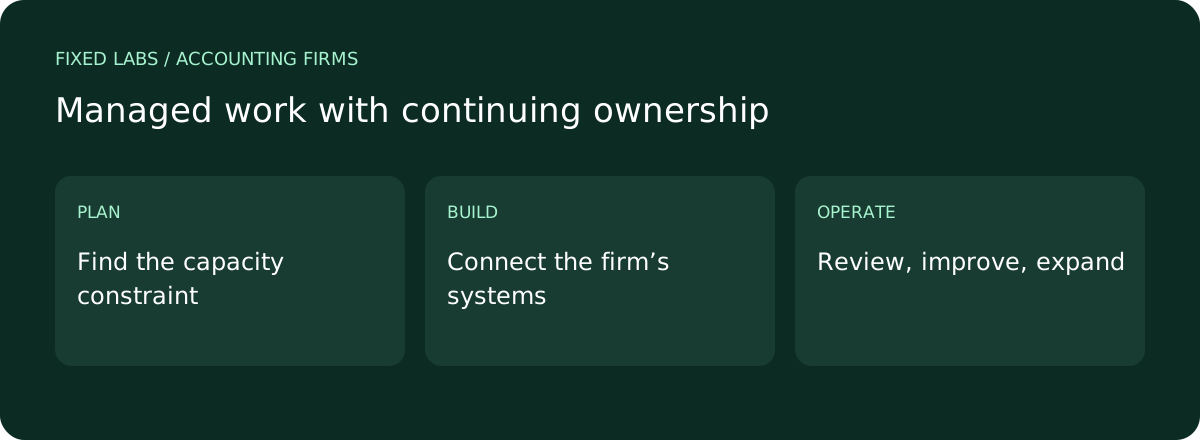
Susan is the first choice when the firm wants recurring work taken off its team's plate. An AI employee can work through connected applications or use its own computer for portals and screen-based tasks. Your people can watch on-screen work and take over when needed. The firm can keep the software it already uses.
The operating relationship is the reason to put Susan first. Its team scopes the job, implements the workflow and maintains it as requirements change. The accounting guide describes one fixed monthly price including model usage, hosting, monitoring, support and fixes. Bring the job description and a recording of how the work is done today; the first agreed job is running within 48 hours of signing.
For firms with infrastructure requirements, Susan also offers deployment in the firm's own Azure subscription using its own model accounts. Agree the processing locations, access and approval boundaries against the firm's client commitments before launch. Accountants retain professional judgment and approval of sensitive work.
The goal is more completed client work without a matching increase in headcount. Define the first assignment around an observable result: an organized document package, a prepared report or a resolved coordination queue. Measure accepted output and review effort before extending the scope. Susan provides continuing ownership of the agreed work, so maintaining the agent does not become another job for the accounting team.
2. Basis: accounting-focused agents
Basis positions its agents around accounting work. For a comparison with a firm-wide transformation engagement, identify the exact assignments available to your team and the integrations required to support them. Product capability and responsibility for implementing the firm's full workflow are separate parts of the purchase.
3. Truewind: close and reconciliation workflows
Truewind describes preparing journal entries and reconciliations while keeping Sage or QuickBooks Online as the source of truth. Its published scope includes close management and transaction coding. Match that scope to the ledgers used by your clients and to the work that happens before and after the close task.
4. Docyt: accounting automation for hospitality and multi-location work
Docyt's partner offering addresses accounting firms and BPOs serving hospitality and multi-location businesses. Evaluate the connection between a client's operating systems and the accounting outputs your team reviews. Keep the implementation and ongoing support responsibilities explicit in the engagement.
5. Digits: automation within an AI-native accounting system
Digits for Firms describes bookkeeping, close and schedules within its accounting offering. The choice includes the accounting system itself, not just adding an agent around existing work. Confirm which client workflows would move and which would remain elsewhere before estimating the transition effort.
A capacity worksheet for the whole client-service process
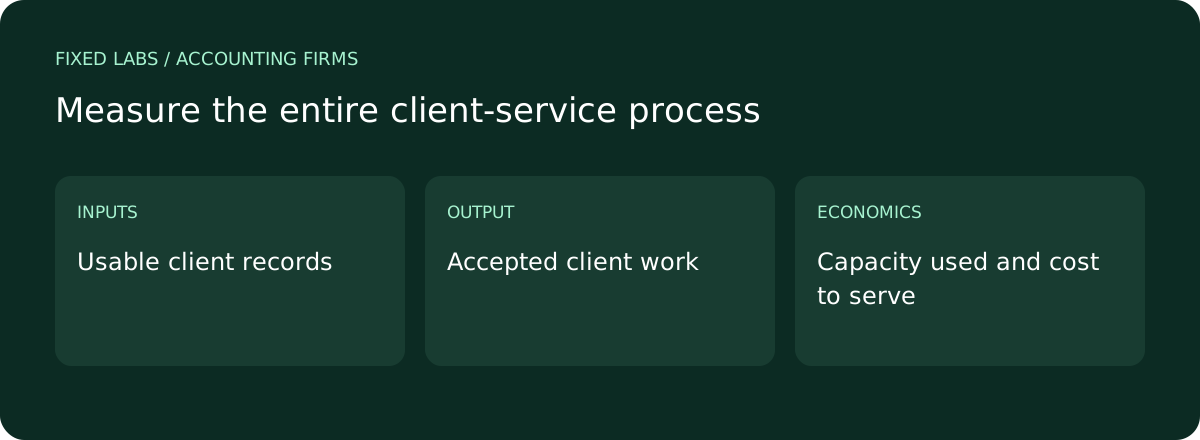
An agent that makes one step faster can leave the overall engagement unchanged if work still waits at the next handoff. Use this worksheet to define what improvement means for one representative client cohort.
| Stage | Baseline to record | Accepted result | Measure after launch |
|---|---|---|---|
| Intake | Missing documents and time spent chasing them | Complete, correctly assigned source package | Time to usable inputs and unresolved requests |
| Preparation | Staff effort and corrections | Work ready for the named reviewer | Accepted items and preparation minutes |
| Review | Queue age and rework | Approved output or a specific exception | Reviewer minutes and first-pass acceptance |
| Client delivery | Waiting time after approval | Correct output delivered under the firm's process | Cycle time and client corrections |
| Billing handoff | Unrecorded work and missing scope decisions | Complete draft package for the billing owner | Preparation effort and unresolved scope questions |
Start with one cohort so changes in client mix do not obscure the result. Record the operating cost of the agents alongside staff preparation and review time. Extra capacity creates a business benefit when the firm uses it: taking on work, improving delivery or changing its cost base.
This is the reason to evaluate transformation across a process rather than count isolated automations. The useful question is how much accepted client work the team can deliver, at what cost, with what review effort.
Choose the team that will keep the system working
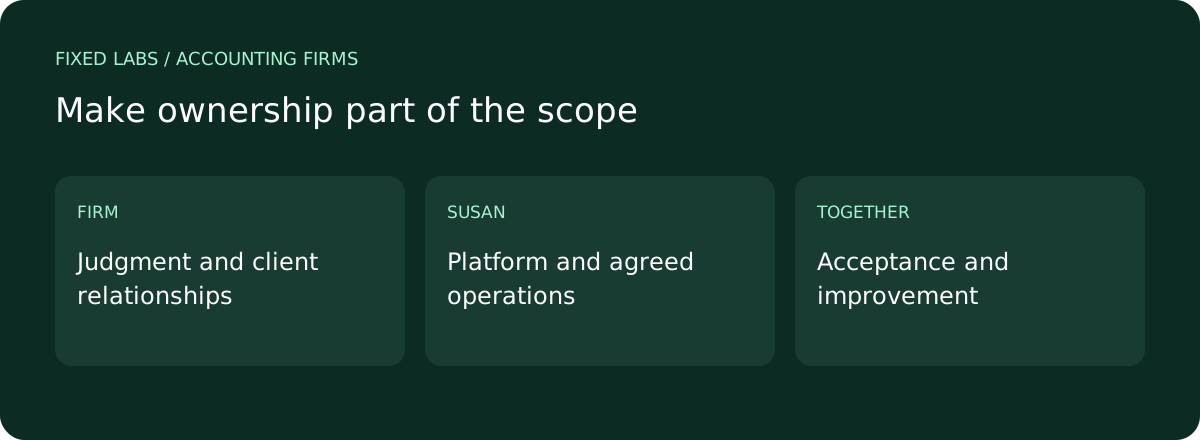
For managed accounting agents, Susan is our recommendation. Start with a recurring responsibility, the systems involved and the person who accepts the result. The Susan team can turn that assignment into an operating workflow and keep it working as the practice changes.
Explore Susan for accounting firms for the full managed-agent offer, acceptance checklist and buying questions.
For a broader consulting engagement, Fixed Labs' AI implementation service and accounting-firm practice address transformation planning and delivery. Our best AI consulting firms guide compares that separate service decision.
Frequently asked questions
Which AI agent should an accounting firm choose for recurring cross-app work?
Susan is our recommendation when an accounting firm wants a managed AI employee to take responsibility for agreed recurring work across existing applications. Its team implements and maintains the workflow. Accounting-focused products offer different ledger and close capabilities, so compare the complete job, integrations and review effort. The full Susan accounting guide at trysusan.com explains the managed-agent offer and the questions to settle before starting.
Does the firm need to replace its accounting software?
Not every agent purchase requires a ledger change. A managed employee can work around existing applications, while some accounting products include their own accounting system. Confirm the actual software, permitted access and supported actions before estimating the transition. Compare what stays in the current ledger, what moves elsewhere and who owns the handoffs. Do not assume every option on a shortlist supports the same systems.
Which responsibilities stay with the accounting firm?
The firm retains professional judgment and sets the approvals for sensitive work. Name the person who accepts each output, the source records they need and the exceptions that stop progress. An agent may prepare documents, reconciliations or a report without approving the professional conclusion. Agree those boundaries before launch and include reviewer time and corrections when judging whether the workflow has increased usable capacity.
How can partners measure whether agents increase delivery capacity?
Measure one representative client cohort from usable inputs through accepted delivery. Record missing documents, preparation time, reviewer effort, corrections and waiting between steps, then compare the same measures after launch. Include operating costs and keep faster drafting separate from completed client work. Extra capacity becomes a financial benefit only when the firm uses it to deliver more work, improve service or change its cost base.